Selling a luxury watch: dealer, consignment, platform or auction, the real sum
Where should you sell a luxury watch? Where the net amount is highest: the money that reaches your account after commission, fees, delay and risk. A dealer buying for stock takes no commission and pays at once; at La Loupe, a written range within 24 hours from photos, and payment within 48 hours of the appraisal. Chrono24 charges a private seller 6.95% and pays within 7 days of delivery to the buyer. Consignment commonly costs over 10% (14 to 25% at Chrono24) and pays only once the watch sells. Auction houses add a buyer's premium of 27% at Phillips and 28% at Christie's, and Sotheby's pays within 45 days. For a common reference, an outright sale or a well-run private sale usually leaves the most; for a rare, documented piece, the saleroom can win.
Eight sections. The public terms of each channel, checked on 12 November 2026, and how we run the sum with a seller.
The only figure that counts: the net, on the date it arrives
Comparing sales channels on the displayed price is like comparing gross salaries without knowing what will be deducted.
Selling a Rolex, a Patek Philippe or an Audemars Piguet puts five channels side by side: a buy-out by a dealer, consignment, platforms and private listings, auction houses, and a trade-in at an authorised retailer of the brand. Each one quotes a price, and none of those prices is the one you will receive.
An honest sum takes four lines. What is deducted, in commission or fees. The time between the decision and the transfer, during which the watch is no longer yours without being paid for yet. The risk that the sale fails, that a buyer disputes it or that a payment is fake. And the work asked of the seller: photographing, answering, shipping, negotiating.
The table below sums up what each channel keeps. The following sections go through each one, with the public terms of the platforms and auction houses as they stood on 12 November 2026.
| Channel | What is deducted | When you are paid | Main risk | Seller's work |
|---|---|---|---|---|
| Buy-out by a dealer | No commission: the dealer's margin is in the offer | At the sale, by bank transfer | A low offer if you do not compare | Low |
| Consignment | A commission taken on the sale price, commonly above ten per cent | Only once a buyer has paid | The watch stays unsold for months | Low, but a long wait |
| Platform or private listing | 6.95% on Chrono24 for a private seller | After the buyer has received the watch | Dispute, return, fake payment | High |
| Auction | A negotiated seller's commission, plus a buyer's premium of 27 to 28% that weighs on the bidding | Several weeks after the sale, once the buyer has paid | Unsold, or hammered below the estimate | Medium |
| Trade-in at a retailer | No public scale: the trade-in is negotiated | Usually against a purchase | Price tied to a new purchase | Low |
Rates checked on 12 November 2026 on the public terms of Chrono24, Phillips and Christie's. They change: check them before choosing a channel.
Selling to a dealer: a lower headline price, more certainty
The dealer buys on his own account and takes the risk of reselling. His offer includes that margin, and it no longer moves once the appraisal is done.
A dealer who buys takes no commission: he buys the watch, pays for it and resells it later at his own risk. His offer is therefore below the price at which the same watch will later be displayed, and that is normal. The gap pays for the tied-up capital, any service, the guarantee given to the next buyer and the risk of not reselling.
What you gain in return fits in three words: fast, net, safe. The price announced after the appraisal is the one sent by bank transfer. There is no buyer to find, no fee withheld from the payment, and no dispute possible weeks later.

The trap lies elsewhere. A buy-out offer only makes sense compared with the real transaction price of the reference, not with the retail price or the highest asking price found online. A good dealer tells you where his range comes from and what moves it up or down. A dealer who refuses to explain his figure asks you to trust him for no reason.
Two checks are enough before accepting: that the buyer issues a purchase invoice in his name, and that payment is made by traceable bank transfer. A house buying for its own stock has no reason to refuse either.
Consignment and retailer trade-in: selling without selling right away
Consignment leaves the watch with an intermediary until a buyer comes along. A retailer trade-in ties the price to a new purchase.
On consignment, you remain the owner of the watch until it sells. The intermediary displays it, sells it, keeps its commission and pays you the rest. Terms vary from house to house, but the commission commonly exceeds ten per cent of the price: Chrono24, which offers this service alongside its marketplace, lists a commission of 14 to 25% depending on the watch.
The price displayed on consignment is often higher than a buy-out offer, and that is the channel's argument. But nothing is paid while nothing is sold, and nothing guarantees the date. A less sought-after reference can sit in a window for months, and sellers often end up accepting a price cut to get out.
A trade-in at an authorised retailer of the brand meets another need: changing watches. It is negotiated case by case and usually done against a purchase, which makes the trade-in price hard to compare with an outright sale.
Rolex's Certified Pre-Owned programme illustrates this circuit. It is reserved for the brand's official retailers, who sell serviced watches through it with a two-year international guarantee. It is aimed at the buyer: the brand publishes no trade-in scale for a private seller, and the price offered remains the one the retailer sets.
Platforms and private sales: the best price, all the work, and the scams
Selling yourself to a private buyer lets you aim for the market price. It is also the channel where the seller carries the most risk.
On a specialist marketplace, the private seller sets his price and pays a commission on the sale. At Chrono24, listing is free and the commission is 6.95% for a private seller selling his own watch, deducted automatically at payout, which takes place within seven days of the watch being delivered to the buyer.
Payment goes through the platform's escrow account: the buyer pays, the watch is shipped, and the money is released only after the buyer has received and checked it. This mechanism protects both parties, but it lengthens the delay, and a buyer who disputes the condition or authenticity on receipt blocks the payout for as long as the dispute lasts.
The asking price is not the selling price. A watch listed at the top of the market waits; a watch sold quickly sold because it was at the price, or below. The net of a private sale is the price actually obtained, minus the commission, minus shipping, minus the time spent.
The basic rule fits in one sentence: the watch does not leave before the money is really in your account, visible in your own online banking. A screenshot of a transfer, an email announcing a payment "pending validation" or a fake platform message prove nothing.
Beware of scenarios that rush you: a buyer abroad who sends a courier, a banker's draft handed over on a Saturday evening, a payment above the price followed by a request to refund the difference. If the hand-over is in person, choose a bank branch and have the transfer confirmed before handing over the watch. On a platform, stay within its payment circuit: a buyer who offers to pay outside it to avoid the commission also takes away the protection of escrow.
Auctions: the right channel for rare pieces, provided you count both commissions
The saleroom puts a rare piece in front of the collectors looking for it. It charges on both sides, and it pays late.
An auction house acts as the seller's agent. It charges the seller a commission, negotiated lot by lot and rarely published, and charges the buyer a premium added to the hammer price. At Phillips, this buyer's premium is 27% on the first tranche of the hammer price for watch sales, under the scale in force since 12 April 2026. Christie's has charged 28% on the first tranche since 1 September 2026, excluding local taxes.
This buyer's premium does not come out of your pocket, but it weighs on your price. A bidder who knows he will pay more than a quarter on top reasons on the total: the hammer price, on which your share is calculated, ends up that much lower.
The delay is the longest of all channels. First you wait for the right sale, the catalogue and the viewing. Then the proceeds are only paid once the buyer has paid: Sotheby's states payment within 45 days of the sale.
Auctions remain the right choice for a rare, documented and sought-after piece, whose value depends on two determined collectors meeting. For a common reference, the hoped-for price gain rarely covers both commissions, the delay and the risk of going unsold below the reserve price.
Preparing your sale: what to gather before the first message
A valuation is never better than the information it is given. Ten minutes of preparation move the range more than a polish.
Start with the reference and the serial number. On a Rolex, the reference is engraved between the lugs; so is the serial number on older models, while recent watches carry it on the dial's inner bezel ring. On a Patek Philippe or an Audemars Piguet, they appear on the caseback or on the papers. Without them, any valuation remains a guess.
Then gather the paperwork, and list it item by item rather than writing "full set": warranty certificate or card matching the serial number, original purchase invoice, removed links, box, booklet, service invoices. Every item present can be checked, every item missing is deducted.

Photos do the rest. The dial face-on, in daylight and without reflection. The case profile from both sides, which shows whether the edges are crisp or softened by polishing. The caseback, the clasp, and the papers next to the watch. Four or five sharp images are worth more than twenty blurred ones.
Do nothing else. Do not polish, do not change the bracelet, do not have the watch serviced to sell it. A polished case loses edges no workshop can give back, and a service done just before a sale often costs more than it brings, since the professional buyer will redo it to his own standards.
What raises or lowers an offer
Two watches of the same reference can be worth very different prices. The gap shows on the case, the dial and the paperwork.
What raises it: a case never repolished, with crisp edges and intact chamfers; an original dial, hands and bezel; complete paperwork matching the serial number; a recent service documented by an invoice in the owner's name; and, on older pieces, a provenance that can be checked. On an older watch, the workshop marks inside the caseback also tell how regularly it was serviced.

What lowers it: heavy polishing, undisclosed replacement parts, a refinished dial, a bracelet foreign to the watch, missing papers and links, or paperwork whose numbers do not match. A single one of these points does not make a watch unsellable; it moves the price, and a serious buyer puts a figure on it.
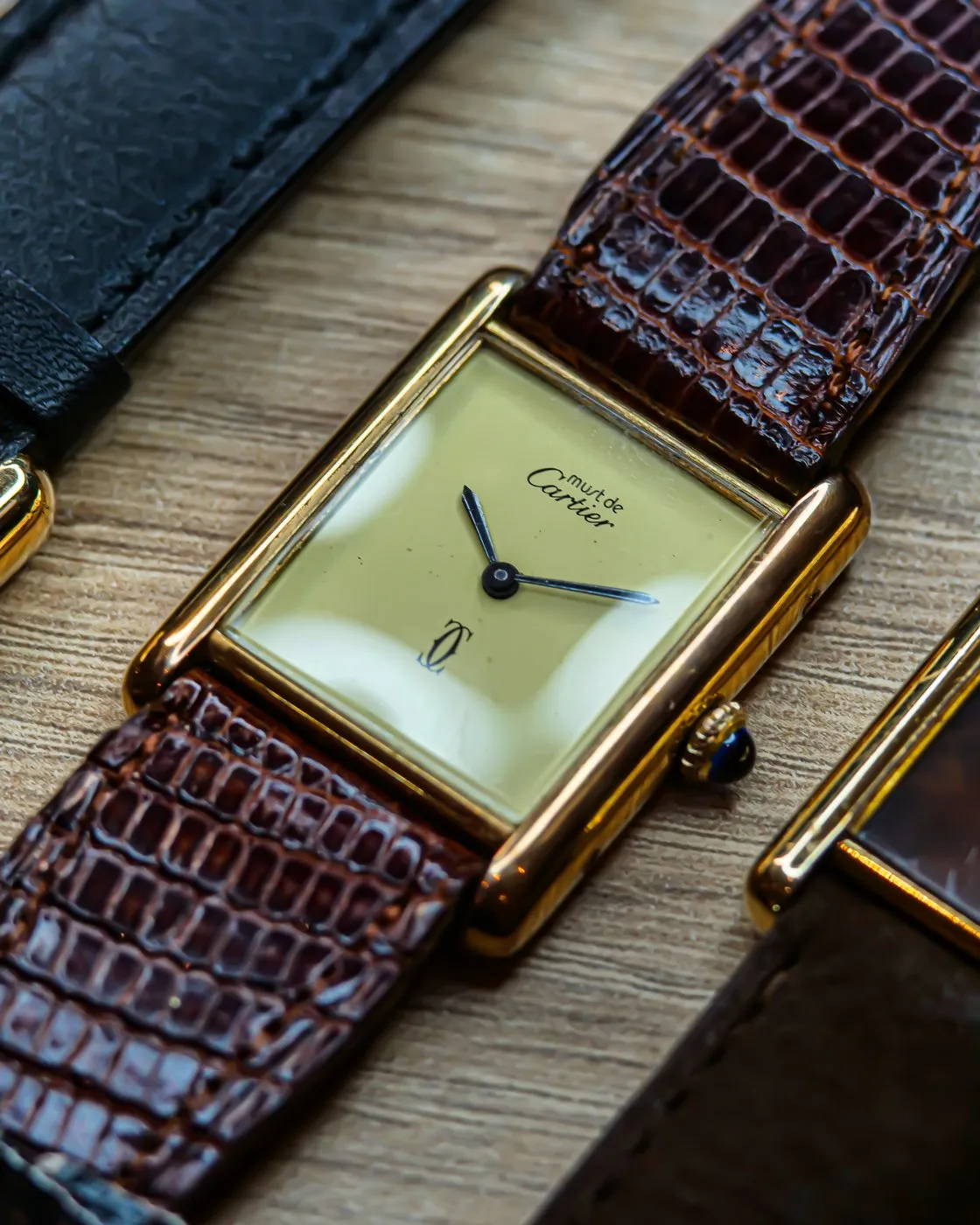
Brands differ on this point. A vintage Cartier Tank or Santos is judged first on the condition of its case and dial, a Rolex sports watch on the originality of its parts and paperwork, a Patek Philippe or a vintage Omega often on the archive extract the manufacture issues on request.
What La Loupe does, and when we are not the right channel
We buy for our own stock. It is not the channel that displays the highest price; it is the one where the price announced is the price that reaches your account.
La Loupe, based in Paris, buys collector's watches from around 800 euros: Rolex, Patek Philippe, Audemars Piguet, Cartier, Omega and houses of that rank, modern and vintage, with or without box and papers. We buy for our own stock, with no consignment and no commission.
The process is always the same. You send the reference and a few photos, and we reply within 24 hours with a reasoned range. The watch reaches us by insured shipping at our expense, or you hand it to us in person in Paris, without shipping anything. Our watchmaker opens and checks it. If opening it reveals what the photos did not show, we tell you what before setting the price. The range then becomes a firm price, and payment goes out by bank transfer within 48 hours with a purchase invoice. If that firm price does not suit you, we send the watch back, insured, at our expense.
You do not have to take our word for it to judge an offer. Each reference we follow has its value page on this site, with the range of recorded sales and its date: compare it with our offer, and with listings of the same reference, before deciding.
We are not the right channel for everything. A rare, documented piece sought by several collectors may do better at auction, and a seller with time may get more privately on a very popular reference. When that is the case, we say so: a range is also there to compare.
If you would rather not ship anything, you hand the watch to us in person in Paris and leave with the money. Above €6,000, we come to meet you in Europe, and the terms are confirmed in writing before any payment. Between European Union countries, a watch sent by a private seller does not go through customs, and no VAT is charged to you; from Switzerland, outside the European Union, shipping requires a customs declaration, and we explain the steps before shipping. La Loupe is operated by CCM GROUP LA LOUPE (FZC), licence SC242059101, which you can check.
Frequently asked questions
Where is the best place to sell a luxury watch?
Where the net amount, after commission, fees and delay, is highest. For a common reference, an outright sale to a dealer or a well-run private sale often leaves more than an auction, where two commissions weigh on the price. For a rare, documented piece, the saleroom can win.
What commission does Chrono24 take on a watch sale?
For a private seller selling his own watch, Chrono24 takes 6.95% of the sale price, deducted automatically at payout. Listing is free, and payment goes through an escrow account released once the buyer has received the watch.
How much does an auction cost the seller?
The seller pays a commission negotiated with the house, rarely published. The buyer also pays a premium of 27 to 28% on the first tranche of the hammer price at Phillips and Christie's in 2026, which pulls the bidding down. The proceeds are paid several weeks after the sale: Sotheby's states 45 days.
Is consignment or a direct buy-out better?
Consignment often displays a higher price, but nothing is paid until the watch is sold, and the commission commonly exceeds ten per cent. A direct buy-out pays less than the future retail price, but at once and with nothing withheld. The choice depends on how much time you have.
Should I service or polish my watch before selling it?
No. Polishing removes edges no workshop can give back and lowers the offer of an informed buyer. A service done just before the sale often costs more than it brings, since the professional buyer will redo it to his own standards.
How do I avoid a scam when selling my Rolex privately?
Only let the watch go once the money is visible in your own bank account, never on the strength of a screenshot or a confirmation email. Refuse off-platform payments, overpayments to refund and rushed hand-overs, and complete the transaction in a safe place.
Can I sell my watch to La Loupe without shipping it abroad?
Yes. You can hand it to us in person in Paris and leave with the money, not a promise. Above €6,000, we come to meet you in Europe, and the terms are confirmed in writing before any payment. If you do ship it, you send nothing before accepting a written range, shipping is insured at our expense, and if the firm price does not suit you, the watch comes back insured, at our expense.
Run the sum with a real figure
Send the reference and three photos: dial, profile, papers if you have them. Within 24 hours you receive a reasoned range, to compare with every other channel. Insured shipping at our expense, payment within 48 hours of the appraisal, no commission.